





Can I Park My Motorhome on a Resin Driveway?
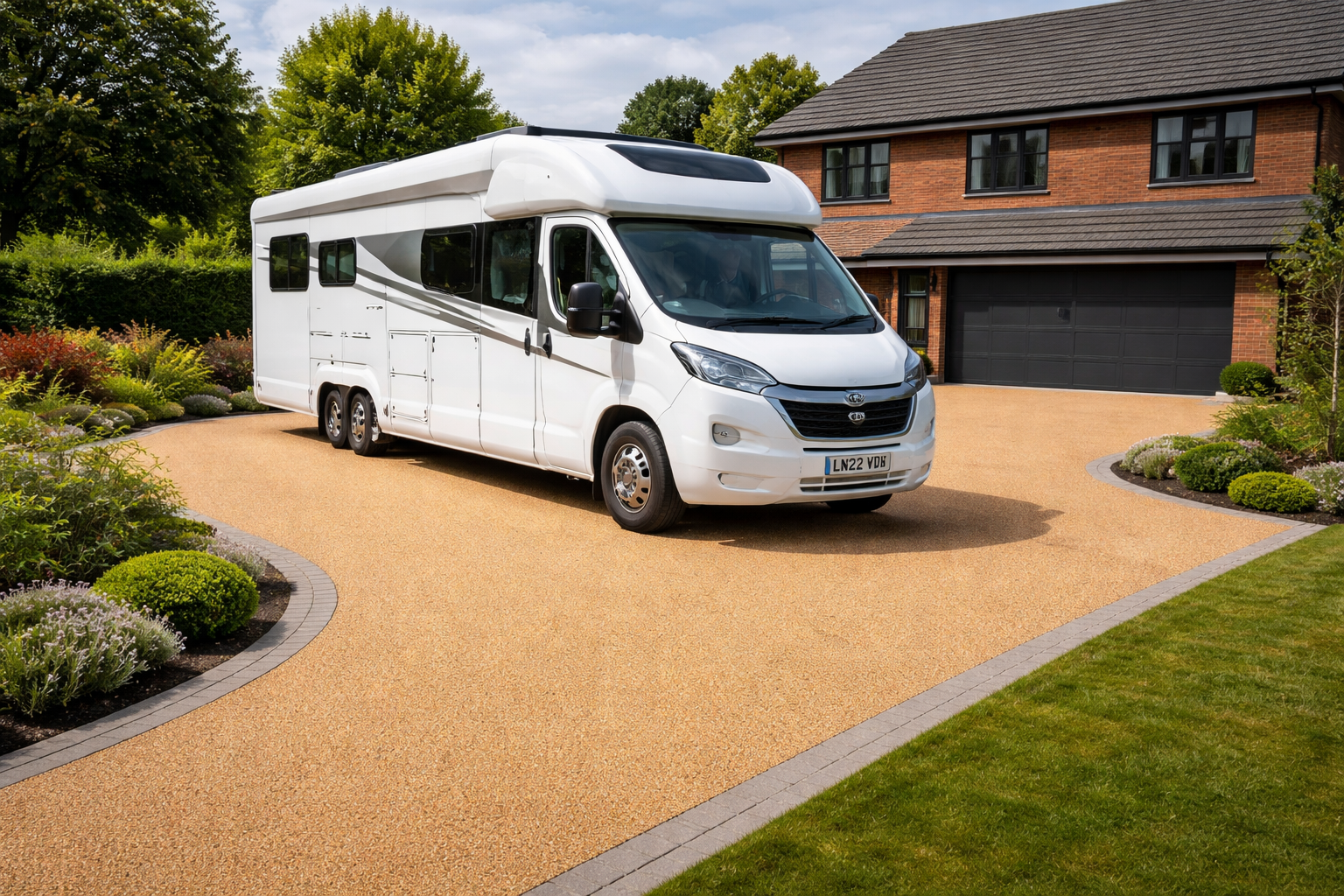
Yes, you can park a motorhome on a resin driveway, but there are several considerations to ensure the surface remains durable and free from damage. Because motorhomes exert significantly more pressure than a standard family car, the specifications of your driveway must be adjusted accordingly.
Understanding Resin Driveway Load-Bearing Capacity
Resin-bound driveways are designed to support the weight of standard vehicles. A typical residential resin driveway, laid at a thickness of 15–18mm, is generally rated for loads up to 7.5 tonnes. This makes them perfectly suitable for family cars, SUVs, and light commercial vans.
However, motorhomes—especially larger or fully loaded models—can weigh between 3.5 to 7.5 tonnes or more. While this technically falls within the limit, the point loading (the pressure exerted by the tyres in a fixed position) can be much higher. Therefore, it is crucial to ensure the driveway is engineered specifically for these heavier, long-term loads.
Key Factors for Supporting a Motorhome
- Sub-Base Strength: The foundation is the most critical element. For motorhomes, a deeper sub-base of compacted Type 1 MOT or a reinforced concrete base is essential to ensure even weight distribution and prevent sinking.
- Resin Layer Thickness: For heavy vehicles, a standard 18mm depth may not suffice. A thicker resin layer of 20–25mm is highly recommended to enhance structural integrity.
- Quality of Materials: High-quality, UV-stable (Aliphatic) resin ensures the bond remains strong and doesn’t become brittle over time, which is vital when supporting heavy weight.
- Professional Installation: Experienced installers will know how to grade the surface and prepare the sub-structure to handle the specific tonnage of your vehicle.
Potential Risks to Consider
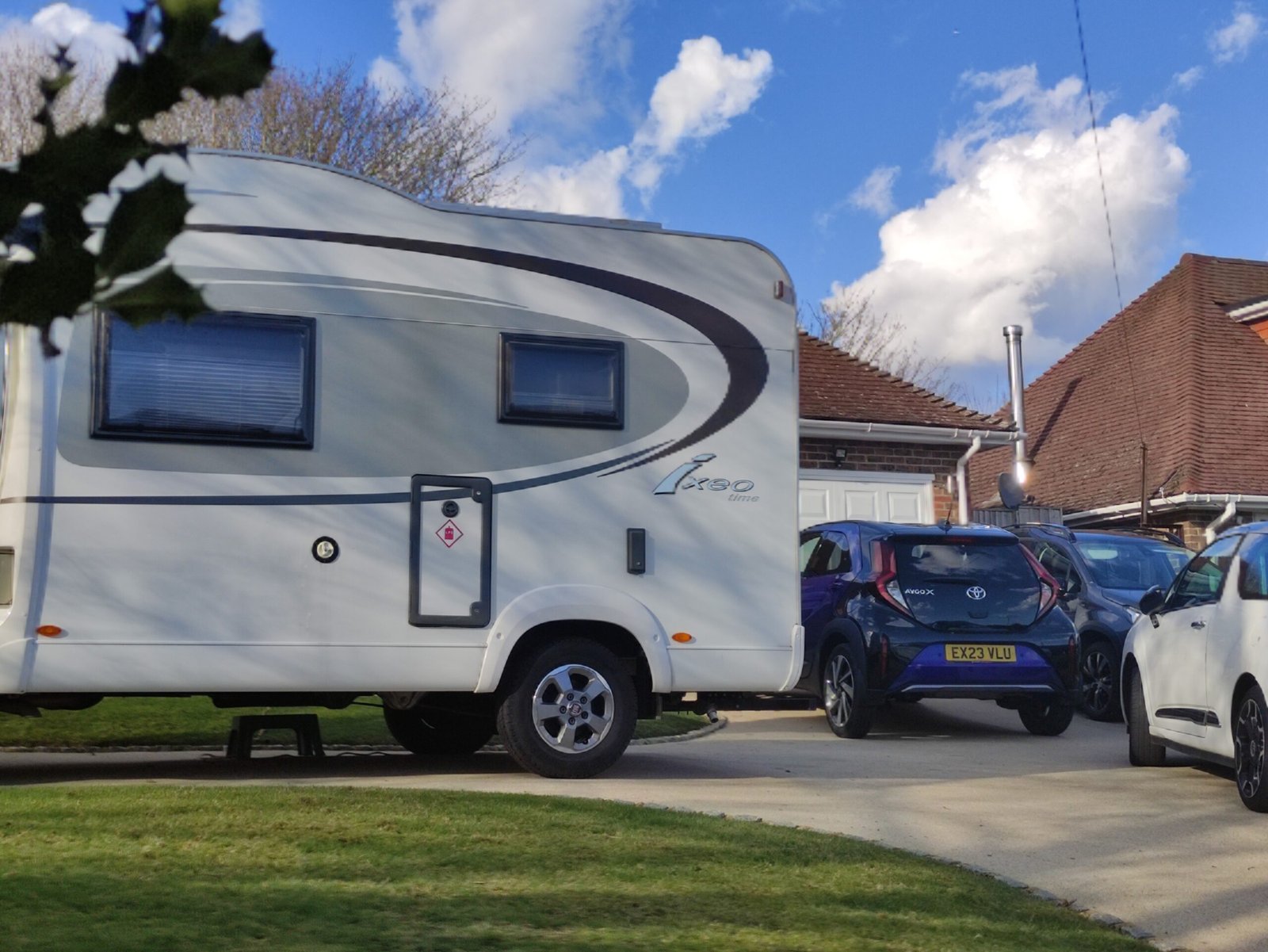
If a resin driveway is not specifically reinforced for a motorhome, you may encounter the following issues:
- Surface Deformation: Extended parking of heavy vehicles can lead to “flat spots,” indentations, or depressions where the tyres sit.
- Cracking: Without an adequately strong sub-base, the weight can cause the rigid resin surface to shear or crack.
- Staining: Motorhomes often sit for long periods; oil leaks or stagnant water beneath the vehicle can lead to staining if the area isn’t regularly inspected and cleaned.
Recommendations
To preserve your investment while enjoying the convenience of home parking, follow these tips:
- Consult with Professionals: Always inform your installer if you plan to park a motorhome. They can adjust the MOT depth and resin thickness accordingly.
- Use Spreader Plates: If parking for several months (over winter, for example), consider using tyre mats or spreader plates to distribute the load more evenly.
- Regular Maintenance: Clean beneath the vehicle periodically to remove debris and check for any fluid leaks that could damage the resin bond.
Conclusion
In conclusion, while resin driveways can support motorhomes, ensuring the driveway is designed and constructed to handle such loads is essential for maintaining its durability and appearance. With the right thickness and a reinforced base, a resin driveway provides a stunning and functional parking solution for your leisure vehicle.
Tip: If you are planning to park a vehicle exceeding 7.5 tonnes, a concrete sub-base is almost always a requirement for a resin-bound finish.